An Egg Fermenter. Nothing to do with chickens and apparently all the rage in Bordeaux. How does it actually work? God only knows, but it looks great doesn't it?
Monday, September 13, 2010
Friday, September 10, 2010
Back... Just About...
Back in Ireland two weeks already. Seems like we were never away. Reports are that the vines are all doing well and harvest will be mid-October. Plenty going on here - easiest to copy and email I sent to a friend earlier today.....
"I just seem to have been running around in a blind panic for the past fortnight since we got home - and looking back on it I'm not sure if I actually achieved anything. We did manage to get the kids off to school - eldest into secondary school for the first time and youngest into national school on the same day! At one stage it felt like we were about to send them off to school with bottles of wine in their bags - meanwhile dropping some sandwich samples into local restaurants - but we managed to get it all sorted in the end. Our fortnight of mayhem came to an end yesterday when the arrival of some new hens brought some sanity, and calm, to the whole place - although disappointingly the "Thursday Man" had no ducklings which we were also counting on - but they may yet appear.
As for all things food and wine related, the West seems to have had a pretty good Summer. Obviously we were working from Slovenia, with me shuttling backwards and forwards and in contact with customers, but even so, there does definitely seem to be a quiet air of relieved satisfaction that the Summer turned out to be better than expected. In fairness, everyone is crediting the hotels for bringing people into the towns by doing amazing deals - and this in turn spreads some money around the restaurants and shops - and amazingly since people can now see how beneficial eachothers businesses are, they are starting to talk about working together to maximise opportunities - great what a recession can do for group therapy! The West was definitely a beneficiary of people holidaying at home - I don't think things were so rosy in Dublin and on the East coast.
The big challenge though is to make sure that "good value" doesn't become a synonym for lowest common denominator in terms of delivering an interesting offering. In terms of wines, "House Wines" is where it's at with big pressure on margins, but also the potential for big volumes. But that can squeeze out the smaller, quirkier producers - very few hoteliers and restaurateurs want to take risks and the danger is that we (collectively) become a nation of Pinot Grigio and Sauvignon Blanc drinkers - not that there is anything wrong individually with each - but we all do need a bit of variety. Our challenge now is to try and walk the tightrope between a commercially viable portfolio - and one that also includes nuggets of wine individuality. But it's not just about having them for the sake of looking good - we all need something interesting to sell, something to be passionate about, something new, something that we believe in whilst others might laugh (well hopefully not too loud!) - something unique. We have a few new suitable candidates up our sleeves, including a viable Modra Frankinja that we helped do the blend for and is being bottled this week - so no pressure at all on us then!
I'm actually quite positive though about the opportunities for the smaller, quirkier, individualistic approach. Much as everyone is focussed on margins and playing safe (and who can blame them), they also want something a little different. We're finding more and more that as prices drop and consumers have a broad range of choice at similar prices - what they want is individuality. The recession is a great opportunity for the smaller, adaptable, passionate supplier.
Anyway, that's my manifesto for the next few months! We were sad to leaves the vines behind - we learnt so much this year, in the vineyard, but also in the local community. There is so much information you can pick up without realising you're learning it - it was hard to leave, but also easy to return here. We will make a short dash back in the middle of October for the harvest - and try not too lose too many fingers as we harvest the fruit."
In the meantime, plenty to be busy with here......
Wednesday, August 25, 2010
Fungi delights
We’re due to head back to Ireland in the next few days – and all very hectic trying to finish everything off – next time we return it will be harvest time in mid-October.
Aside from the grapes looking pretty good at this stage, lots of other things (very frustratingly) are just reaching optimum ripeness. We’ve already had plenty of blackberries and now plums, pears and peaches are all over the place – literally falling off the trees all around us.
The other really special wild treasure are mushrooms in the forest – all shapes and sizes. About 60% of Slovenia is covered by trees, so mushroom hunting is very much a local pastime - and speciality. Truffles are also apparently around, but hunting for them is forbidden so they don’t really feature in the local cuisine.
However there are a multitude of fungi of all shapes and sizes. I only wish we knew more about them – something to read about over the Winter. Many of them look vaguely familiar – but not familiar enough to try!
I did however find something I have never seem before – a mushroom that looks like it would be more at home it the sea as a red starfish! Picture quality isn't great as it was taken with a phone camera in a dark forest. I have no idea what it is – any ideas?
Tuesday, August 24, 2010
Only 74km to Go......
Saturday was Gaelforce West day in Mayo. With over 3,000 competing in 2010, in just a few short years it has become the “largest one day adventure race of its kind in the World” – these would be the ones that involve a 12km run, kayaking across a fjord (Killary Harbour), running up and down a mountain (Croagh Patrick) and then cycling 33km to the finish. Must be loads of them.
Anyway, in sympathy (or stupidity), I decided to enter a local 74km cycle race on Sunday. The course looked simple enough on paper and there are plenty of worse things than cycling through vineyards. There were the same number of competitors as Gaelforce.
Vineyards = hills. 74km of them.
I survived….. just about.
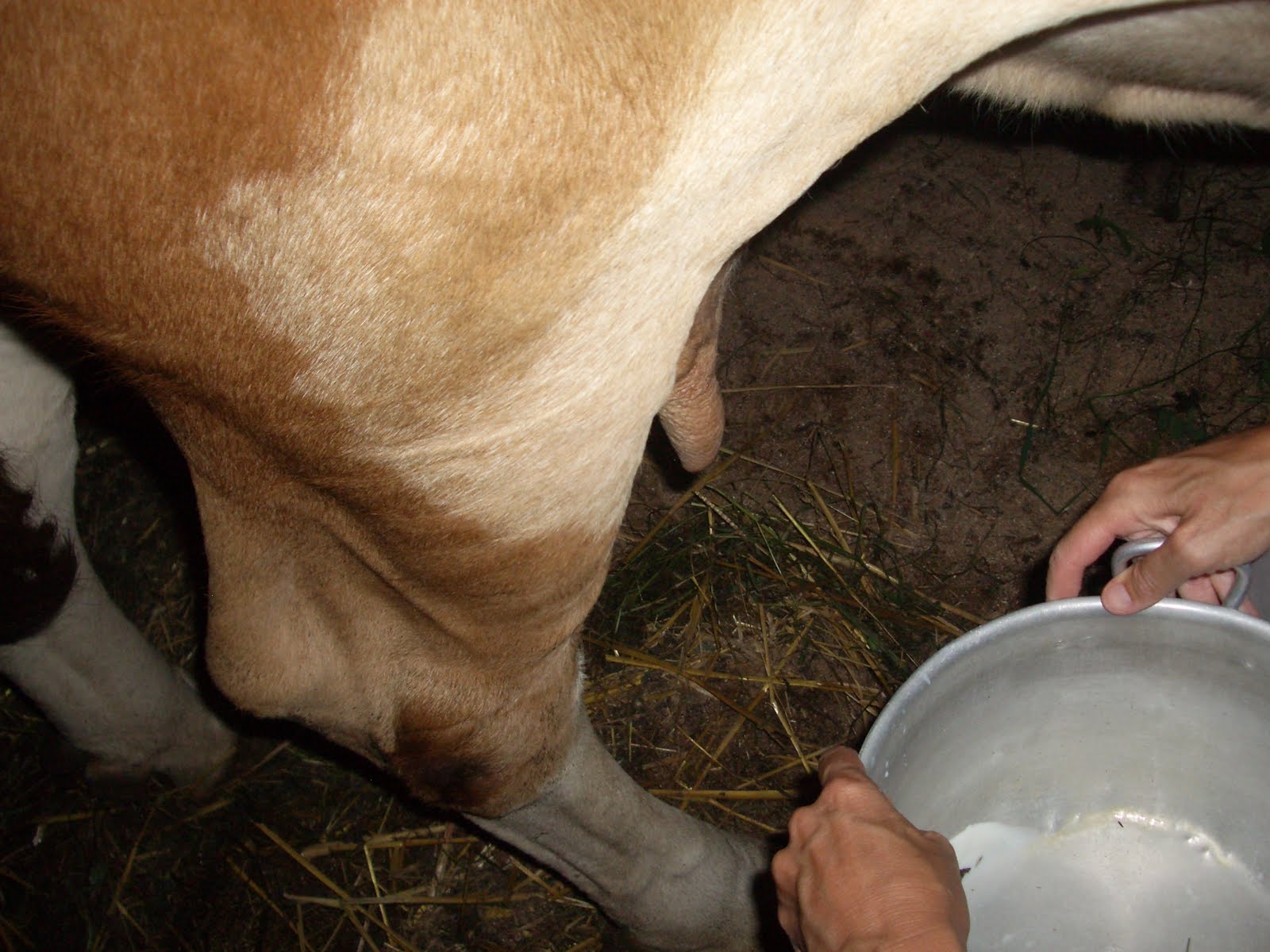
Holy Cow!
I’m aware that not everyone shares my enthusiasm and I’m reminded of a night a few years ago in Dublin’s Chapter One restaurant. Liam and I were holding a Cabot and Co dinner and we opened a bottle of Beaucastel 1981. It divided the table down the middle. Once the glasses were poured there were those of us who stopped talking and gladly fell into the stink. There were others who pushed the glasses away from their place setting and eventually poured their glasses into ours (result!). One poor soul even had to leave for some air.
Back to the cow. I’ll be returning tomorrow to perfect my technique, which is improving. Maybe I’ll persuade Liam that we should get a cow when we go home. But that’s an udder story… (sorry).
Thursday, August 19, 2010
Polz Brothers, Spielfeld, Austria
Here in Kog, we are within 5 minutes of Croatia, 15 of Hungary and 30 of south eastern Austria. The region from here up into Austria is known as Stajerska, or Lower Styria, continuing into Austria as Styria, or Steiermark. The whole region is effectively a contiguous wine-producing region with many similarities on both sides of the border.
A few years back, Miro Munda from around the corner here in Jastrebci, approached the Polz bothers literally just over the border in Spielfeld about a joint collaboration for bottling his wines. So it seemed natural we would pay a visit too!
Today, Eric and Walter Polz’s eponymous winery is one of the most famous in the region. True, the region as a whole doesn’t have the same level of recognition as Wachau or Kamptal, there is no Gruner Veltliner grown (although it’s a topic of debate at the moment) and about 90% of the Riesling is Laski and not the supposedly better Renski variety. But 15 million year-old chalky and sandy soils produce ideal sites for Sauvignon Blanc and Morillon (Chardonnay) and it’s these two white varieties that the area has become justifiably well known for.
The Polz brothers have steadily expanded the winery over the past 25 years and now it hosts a huge array of gleaming fermentation tanks, various sized grape crushers and all sorts of control panels with lots of buttons to push – a bit like the set of a James Bond film!
I have to admit that I don’t have much time for supposed “premium” Sauvignon Blancs – maybe I’m a philistine, but I prefer my Sauvignons simple and quaffable. And the issue of oaked-Sauvignon Blanc…, well, let’s not even go there. As for Chardonnay, well, there’s plenty of it about from just about every other wine-producing country in the world.
So after having embarrassed myself by asking to taste Gruner or Riesling, I reluctantly settled into tasting a series of Sauvignons and Chardonnays – with the odd Pinot Blanc and Traminec (Gewurztraminer) cuvee thrown in.
And I’m quite happy to admit my prejudices about Austria’s ability (or more rightly, Eric and Walter’s ability) to produce quality versions of both were overturned. What really stood out was the minerality in both. The vineyards really do impart an amazing minerality, seashell sediment style to the wines and the climate (a mix of Alpine and Mediterranean) means the grapes can fully mature slowly, resulting in a relatively late harvest and maximum freshness combined with good fruit concentration. And what about the oak? Well, the use of 2,500 litre old “botte” rounds out the wines and gives an extra dimension of richness without ever dominating the original fruit.
Yields are generally low, averaging around 40 hl/ha across the range and all the wines express varietal character, but with a regional individuality.
There are three levels of quality – for me the Classic line was the best. The Morillon/ Chardonnay 2009 (with no oak or malolactic fermentation) had a great minerality with richness of lime fruits and firm acidity (the acidity is a positive characteristics of many of the wines).
They also own another local estate called Tscheppe and the 2007 Sauvignon Blanc tasted was wonderfully structured – partly from skin maceration and a tiny portion aged in barrels – and partly from the ripeness of the 2007 vintage.
Whilst tasting at the state-of-the-art “Cellar Door” shop, it became clear that the winery was a very popular destination in itself. Case after case of wine was dispatched into the back of various vehicles including a Bentley Continental convertible! Apparently turnover on a single Saturday approaches that of a busy Dublin city-centre wine shop on Christmas Eve!
Now that’s successful wine tourism!
Tuesday, August 17, 2010
Kog Wine Festival Weekend
Last weekend was the turn of our local community in Kog to host their Wine Festival, or “Dnevi Turizma” as they call it. Actually the “tourism” term is a bit of a misnomer as the weekend is primarily frequented by locals who participate in both the organising and enjoyment of the activities. It is great for us to be a part of such a small, local community – we’re pretty much the only “outsiders” here.
The weekend also coincided with the Feast of the Assumption on the Sunday, so it was a unique mix of religious and wine-related activities. Unsurprisingly, the two intertwined very neatly together!
The weekend started with a family cycling “expedition” on the Saturday morning – a loop of about 8km up and down the local hills that involved a couple of stops for refreshments at local wine producers along the way. It was a really relaxed, enjoyable affair with great wine, food and lively conversation along the way. The tractor support is something every family outing should have! When tired of the hills, throw the bike and children into the trailer!
Later that afternoon the focal point was the local area outside the church and school where wine tastings, food sampling and good, hearty local dishes were on offer. Again, all for the benefit of locals.
On the Sunday the more religious influences came into play. An outdoor morning Mass at a local shrine was followed later in the afternoon by the Stations at 3pm at another shrine – in fact, probably the best setting ever for a Mass, under the drooping branches of a weeping willow tree, with more tables laden with bowls of goulash and plenty of spritzers for after the mass.
The other key aspect of the weekend was the installation of the local Windmills, or “Klopotec”. Traditionally the vanes and mechanical aspects (i.e. noise-making) are installed over this weekend and the hills now resonate to the sounds of thousands of the wooden hammers hitting the wooden panels on each windmill. They are very much a cultural symbol of this region, but also an effective bird-deterrent – just as the grapes are beginning to get nice and sweet!
The irony of course is that it was billed as “tourist” event, when effectively it was the 150 – 200 of the locals participating – and from our perspective, all the more enjoyable for that. Of course, “tourists” include people from the next parish, so there must have been a few of them too! However, in an area that historically involved all sorts of different cultures laying claim to the region (part of the former Austro-Hungarian empire) it is ironic that it’s the other areas of Slovenia (mostly western) that are thronged with the international tourists.
It’s not to say the potential isn’t here – it’s absolutely here in spades with the beautiful scenery, vineyards, good wine, food and above all, welcoming people. A visit to the Polz winery a few days later just over the border in Austria demonstrated what “wine tourism” can bring to a region in a very positive way. And undoubtedly it will happen here in time.
But for the moment, our little corner remains wonderfully undiscovered and predominantly “local”.
Subscribe to:
Posts (Atom)